
Real-World Data Evaluating Outcomes Following Neoadjuvant and Adjuvant Therapy in Patients with HER2-Positive Early Breast Cancer
2 Faculty of medicine, University of Rijeka, Rijeka, Croatia
Received: 28-Dec-2025, Manuscript No. AMHSR-26-178138; Editor assigned: 31-Dec-2025, Pre QC No. AMHSR-26-178138 (PQ); Reviewed: 15-Jan-2026 QC No. AMHSR-26-178138; Revised: 22-Jan-2026, Manuscript No. AMHSR-26-178138 (R); Published: 29-Jan-2026
Citation: Mikolasevic I, et al. Real-World Data Evaluating Outcomes Following Neoadjuvant and Adjuvant Therapy in Patients with HER2 Positive Early Breast Cancer. Ann Med Health Sci Res. 2026;16:1-10
This open-access article is distributed under the terms of the Creative Commons Attribution Non-Commercial License (CC BY-NC) (http://creativecommons.org/licenses/by-nc/4.0/), which permits reuse, distribution and reproduction of the article, provided that the original work is properly cited and the reuse is restricted to noncommercial purposes. For commercial reuse, contact reprints@pulsus.com
Abstract
Background: Human Epidermal Growth Factor Receptor (HER2)-positive breast cancer accounts for 15-20% of all breast cancer cases. Despite its biological aggressiveness, it shows high sensitivity to chemotherapy in combination with anti-HER2 therapy. This study aimed to assess the real outcomes of neoadjuvant and adjuvant treatment in patients with HER2 positive early breast cancer in this European region. Methods: A retrospective observational study conducted at the Clinical Hospital Center Rijeka, Croatia included 137 adult patients with histologically confirmed HER2-positive early breast cancer treated between October 2016 and May 2024. HER2 positivity was defined as IHC 3+ or IHC 2+ with a positive FISH result. Primary outcome measures included pathological complete response (pCR) and long-term survival. Results: The median age of the patients was 60.2 years. Neoadjuvant treatment was received by 62% of the patients, and adjuvant treatment by 35%. A high pCR rate of 56.5% was achieved in the neoadjuvant group, and 61.3% in the group with dual anti-HER2 blockade. Factors associated with higher pCR rates were HER2 3+ expression (p=0.003), lower expression of estrogen receptors (p=0.016), and higher Ki-67 index (p=0.006). The median time to recurrence was 8.0 years with a recurrence rate of 13.1%. pCR proved to be a strong prognostic factor, especially in patients with stage II, where no patient with pCR relapsed during follow-up. Conclusion: The results confirm the high efficacy of modern treatment protocols for HER2-positive breast cancer. Pathological complete response remains the strongest predictor of favorable outcomes, and its presence almost eliminates early recurrence in stage II disease.
Keywords
HER2; Neoadjuvant; Adjuvant; Pathological complete response; Realword data
Introduction
Breast cancer accounts for 11.7% of all newly diagnosed cancers, with over 2.2 million new cases reported annually. Those defined as Human Epidermal Growth Factor Receptor (HER2)-positive account for 15-20% of all breast cancers. Compared to other subtypes, HER-2 positivity is considered a poor prognostic sign; however, it is also associated with high sensitivity to cytotoxic chemotherapy. This characteristic makes it suitable for treatment with neoadjuvant chemotherapy, enabling the achievement of a complete pathological response (pCR) [1,2].
The probability of achieving a complete pathological response, which is associated with long-term clinical outcomes, has been further increased by the introduction of targeted anti-HER2 treatment in the neoadjuvant setting. Numerous clinical studies have demonstrated the efficacy of HER-2 targeted therapy in various combinations for earlystage HER-2 positive breast cancer. Trastuzumab, a humanized monoclonal antibody targeting the extracellular domain of HER2, was the first to demonstrate effectiveness in neoadjuvant treatment. Its efficacy has been proven in the NOAH trial 2010, where the pCR rate was higher in the trastuzumab group, achieving a pCR of 38.5% [3]. Subsequently, after the approval of trastuzumab, more HER-2 targeted therapies were approved, providing an additional benefit when combined with trastuzumab. Based on the results of the phase II study, the NEOSPHERE study, pertuzumab was approved in combination with trastuzumab and docetaxel in neoadjuvant treatment, increasing the pCR rate to 45.8% [4].
According to the current ESMO guidelines, preoperative chemotherapy with anti-HER therapy comprising trastuzumab and pertuzumab (HP) is preferred for HER2- positive early breast cancer clinical stage II-III to enable postoperative treatment to be tailored to the pathological response of the tumor. Chemotherapy options include either a combination of anthracyclines and taxanes or taxanes with carboplatin [5]. While trastuzumab has been approved by the national regulatory authority in Croatia since 2007 for the treatment of early breast cancer, pertuzumab was approved only in June 2019, after which it became available for use in everyday clinical practice.
In postoperative treatment of early breast cancer, the standard remains trastuzumab for a total treatment of one year, after, or added to chemotherapy, depending on the stage of disease and the chosen regimen. In the case of node-negative cancers up to 2 cm in size, patients can be treated with only 12 cycles of weekly paclitaxel and trastuzumab every 3 weeks for a total of one year, thanks to the results of the APT phase II study [5,6]. The results of the APHINITY trial, following 10 years of follow-up, have demonstrated the benefit of adding pertuzumab, with the most pronounced effect in patients with positive lymph nodes, where the risk of death was reduced by 21% [7]. Postoperative systemic treatment after neoadjuvant chemotherapy and dual anti-HER therapy depends on the type of pathologic response achieved. If residual disease is present, trastuzumab emtansine (T-DM1) is used for a total of one year (KATHERINE study). It has been shown to reduce local and distant recurrences compared to trastuzumab alone [8]. The approval from the national regulatory authority in Croatia for T-DM1 was received in November 2020.
Achieving pCR following neoadjuvant treatment remains a key objective, as it serves as a surrogate indicator of longterm outcomes, including the risk of disease recurrence and overall survival. However, reliable predictive biomarkers for response to neoadjuvant chemotherapy in combination with dual anti-HER therapy are still unclear and require further research [2,9].
Although clinical trials serve as the foundation for evidencebased medicine, translating their findings into routine clinical practice presents inherent challenges related to generalizability and external validity. The rigid enrollment criteria and standardized protocols characteristic of controlled trial environments may not fully capture the heterogeneity of patients encountered in everyday healthcare settings [2]. Real-World Data (RWD) provide valuable information on patient health status and/or healthcare delivery in routine clinical practice, including access to treatment, therapeutic efficacy, toxicity, and quality of life, which can help in developing interventions to improve patients' healthcare quality, including that of those with cancer [10].
This study aims to evaluate the real-world outcomes of neoadjuvant and adjuvant therapy in patients with HER2- positive early breast cancer treated at our institution over eight years, focusing on pathologic complete response rates and long-term survival outcomes. We also evaluate the correlation between radiological response (as measured by MRI) and pathologic complete response after neoadjuvant treatment, as well as assess treatment tolerability. According to our best knowledge this are the first RWD in this European region regarding this topic.
Materials and Methods
We conducted a retrospective observational study that included adult patients (aged ≥ 18 years) with histologically confirmed HER2-positive early-stage breast cancer treated at the Tumour Clinic, Clinical Hospital Center Rijeka, Croatia, following a multidisciplinary team evaluation between October 2016 and May 2024. HER2 positivity was defined as either a 3+ score by Immunohistochemistry (IHC) or a 2+ IHC score with positive Fluorescence In situ Hybridization (FISH) results. All patients received at least one cycle of anti-HER2 therapy in either the neoadjuvant or adjuvant setting. Exclusion criteria were neoadjuvant treatment administered as part of a clinical trial or off-label therapy, and the presence of metastatic disease.
Regarding regulatory approvals in Croatia, trastuzumab has been authorized for early breast cancer treatment since 2007. Pertuzumab received approval in June 2019, followed by trastuzumab emtansine (T-DM1) in November 2020. Our data reflect these regulatory timelines. Demographic, pathological, and radiological data were collected from electronic medical records. Descriptive statistics summarized patients’ demographic and clinical characteristics using means, medians, and standard deviations. Group differences were assessed using Chi-square tests for categorical variables and t-tests or Mann-Whitney U tests for continuous variables, depending on data distribution.
This study was approved by ethical committee of Clinical Hospital Canter Rijeka.
Pathological Complete Response (pCR) was defined as the absence of residual cancer tissue in both the breast and axilla on pathological examination. Complete response on radiologic imaging was defined as no detectable tumor in both breast and axilla on MRI. Survival outcomes, including Overall Survival (OS) and Relapse-Free Survival (RFS), were analyzed using the Kaplan–Meier method, with survival curves compared by the log-rank test. Median survival times and 95% Confidence Intervals (CIs) were reported. Independent predictors of survival were evaluated using Cox proportional hazards regression models. Statistical significance was set at a p-value<0.05. Statistical analyses were performed using MedCalc statistical software, version 19 (MedCalc Software bvba, Ostend, Belgium). As this was a retrospective chart review, no informed consent was required.
Results
A total of 137 female patients were included in the initial analysis. The median age was 60.2 years (95% CI 57.2-62.7 years), with patient’s age ranging from 32.5 to 85.1 years. Nine patients (6.6%) had a previous breast cancer. Details on initial clinical and radiological stage following initial MR are available in Table 1; the majority of patients were node negative (63.5%) and had T1 (42.3%) or T2 cancer (41.6%).
| T | Number of patients | Percentage |
| 1 | 58 | 42.3% |
| 2 | 57 | 41.6% |
| 3 | 13 | 9.5% |
| 4 | 9 | 6.6% |
| N | Number of patients | Percentage |
| 0 | 87 | 63.5% |
| 1 | 44 | 32.1% |
| 2 | 5 | 3.6% |
| 3 | 1 | 0.7% |
| Stage | Number of patients | Percentage |
| 1 | 43 | 31.4% |
| 2a | 54 | 39.4% |
| 2b | 22 | 16.1% |
| 3a | 8 | 5.8% |
| 3b | 9 | 6.6% |
| 3c | 1 | 0.7% |
Table 1: Initial radiological staging.
Histopathologically, NST (No Special Type) was the most common type (N=125, 91.2%). Oestrogen Receptors (ER) were negative in 27.0% (N=37) of patients, while 25.5% (N=35) exhibited a value of 100%. The median value was 75% (95% CI 60.0–90.0). Similarly, progesterone receptors were negative in 46.0% (N=63) of patients, with only 1 (0.7%) showing 100% positivity. The median value was 1 (95% CI 0–6.0). Ki67 ranged from 3 to 85, with a median of 37.0 (95% CI 35.0–40.0). HER2 was highly expressed (3+) in 71.3% of patients (N=97), moderately (2+, but confirmed on FISH) in 37 patients (27.2%), with two patients (1.5%) showing moderate positivity confirmed on FISH after initially being HER2 negative on core needle biopsy. Regarding grade, grade 2 was the most common (N=98, 71.5%), followed by grade 3 (N=36, 26.3%), with only 3 patients having grade 1 (2.2%). A total of 100 patients (73.0%) were defined as Luminal HER2 positive, with others (N=37, 27.0%) classified as HER2 positive, hormone receptor negative. Pathological ypT/pT and ypN/pN data are available in Table 2; data are available for all but one patient.
| Patients treated with neoadjuvant therapy | ||
| ypT | Number of patients | Percentage |
| 0 | 52 | 61.2% |
| 1 | 22 | 25.9% |
| 2 | 10 | 11.8% |
| 3 | 1 | 1.2% |
| ypN | ||
| 0 | 72 | 84.7% |
| 1 | 11 | 12.9% |
| 2 | 2 | 2.4% |
| Patients treated with adjuvant therapy. | ||
| pT | Number of patients | Percentage |
| 1 | 41 | 80.4% |
| 2 | 9 | 17.6% |
| 3 | 1 | 2.0% |
| pN | Number of patients | Percentage |
| 0 | 39 | 76.5% |
| 1 | 12 | 23.5% |
Table 2: Histopathological staging.
Regarding systemic therapy, a total of 85 patients (62.0%) started neoadjuvant chemotherapy with anti-HER2 therapy (NEO), 48 patients (35.0%) received adjuvant chemotherapy with anti-HER2 therapy (ADJ), and 4 patients (2.9%) either refused chemotherapy or were given only endocrine and anti- HER2 therapy.
Chemotherapy was generally well tolerated, but 35.8% (N=49) of patients required a delay in therapy. There was no difference in the percentage of delayed therapies between the NEO and ADJ cohorts (p=0.97). The most common reason for delay was neutropenia (N=17, 12.8% of all patients who received chemotherapy), while 8 patients (6.0%) developed allergic or infusion-related reactions, causing delay. Anti- HER2 therapy was delayed at least once in 7 patients (5.1% of all patients who received anti-HER2 therapy), most commonly due to cardiac or pulmonary symptoms (both N=2, 1.4%).
Patients in the NEO and ADJ groups differed in staging, with the NEO group having fewer patients with T1 tumors (25.9% vs. 73.1% in the ADJ group), and more with T2 (51.7% vs. 25.0%) and T3 tumors (14.1% vs. 1.9%) (p<0.01). Similarly, the NEO group had more patients with N1 (38.8% vs. 21.1%) and N2 stage (5.9% vs. 0%) and fewer with N0 (54.1% vs. 78.8%) (p=0.019).
Neoadjuvant treatment
Most of the patients from the NEO cohort received anthracycline-based chemotherapy (N=69, 81.2% of the group), with a similar number receiving dose-dense (N=35, 41.2%) and three-weekly regimens (N=34, 40.0%). On the other hand, only one patient did not receive neoadjuvant taxanes, with most of the group receiving all planned taxanes (N=76, 89.4%). Most patients received paclitaxel (N=68, 80.0% of the group), while the rest received docetaxel (N=16, 18.9%).
The majority of the NEO cohort received dual anti-HER2 therapy (N=75, 88.2% of the group), five (5.9%) received monotherapy, with two patients not being initially HER2 positive, while the choice of therapy was unknown in three patients. While the numbers are small, as most patients used dual HER2 blockade, only 1 (20%) of the monotherapy group achieved pCR, compared to 61.3% of the dualblockade group (N=46) (p=0.18).
Similarly, patients with HER2 3+ had a significantly higher percentage of pCR compared to patients with HER2 2+ confirmed on FISH (p=0.003) (Figure 1). However, there is no difference in RFS between the two groups (p=0.23).
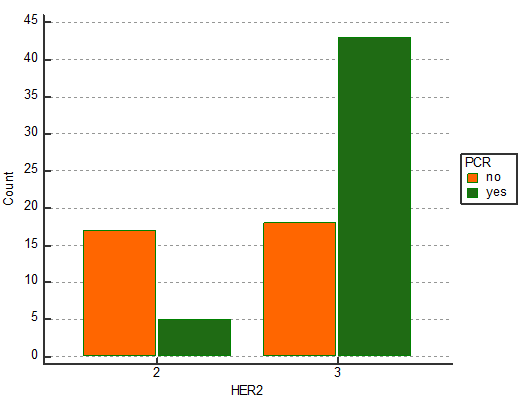
Figure 1: Pathologically complete response based on initial HER2 positivity. Patients with HER2 score of 2 had HER2 positivity confirmed of flourescence in situ hybridisation. Note: PCR: Complete Pathological Response; HER2: Human Epidermal Growth Factor Receptor
Patients with a pCR exhibited lower expression of ER (p=0.016) and higher expression of Ki67 (p=0.006), but not PR (p=0.32). The median time from histopathological diagnosis to initiation of neoadjuvant therapy was less than a month (0.97 months, 95% CI 0.9–1.2), with 95% of patients beginning less than 2.2 months from diagnosis.
Regarding the response, MRI of breasts before surgery was available for 74 patients, with only 1 patient (1.3%) exhibiting progression following NEO (+20% from the initial volume). The majority of patients exhibited regression of the cancer volume, with a mean value of 77.2% regression of breast cancer from baseline (95% CI 69.6–85.0%), and a median value of 100% (95% CI 90.0–100%). A total of 44 patients exhibited a complete response on MRI (N=57.9%).
pCR data were available for all patients, with a total of 48 patients exhibiting a pCR in both axilla and breast (56.5% of the group) and 37 (43.5%) having residual disease in either. There was no difference in pCR between patients with or without anthracyclines (both 56.5%, p=0.98), while the difference in pCR between dual and mono-anti-HER2 therapy did not reach statistical significance (61.3% vs. 20.0%, p=0.18).
Although there is a significant positive correlation between pre-surgery/post-neoadjuvant MRI and pCR (r=0.51, p<0.0001), 18.2% (N=8) of the patients with a complete response on MRI had residual disease, while 30.0% (N=9) of patients with residual disease on MRI did achieve a pCR. Detailed data on ypT and ypN are available in Table 2.
Duration of neoadjuvant therapy was noted in 83 patients, with a median value of 4.6 months (95% CI 4.4–4.8). There was no difference in pCR for patients with longer vs. shorter than median duration of neoadjuvant therapy (p=0.87).
Adjuvant treatment
Out of 48 patients who started adjuvant chemotherapy, 32 patients (66.7%) received no anthracyclines, while the other patients most commonly received 4 cycles of doxorubicin (N=12, 25.0% of the group). The majority of the ADJ cohort were treated either with paclitaxel (N=37, 77.1%) or a paclitaxel-carboplatin combination (N=8, 16.7%), while 3 patients received a taxane-free regimen (6.2%). Only two patients (4.4% of the taxane-regimen group) did not receive all planned cycles. The median duration of adjuvant chemotherapy was 3.1 months (95% CI 2.6–3.5) and ranged from 0.7 to 6.5 months.
Adjuvant anti-HER2 therapy was most commonly trastuzumab only (N=77, 57.0%), with 36 patients receiving dual blockade (26.7%) and 20 patients (14.8%) receiving trastuzumab-emtansine. Details regarding hormonal therapy are available for 85 patients, with most using aromatase inhibitors (N=66, 77.6% of the group) and the rest using tamoxifen (N=19, 22.4%).
Adjuvant radiotherapy was applied in 114 patients at our institution, either 40 Gy/15 fractions (N=60, 52.6% of the patient group), 42.4 Gy/16 fractions (N=22, 19.3%), or 50 Gy/25 fractions (N=32, 28.1%). A boost was applied in 51 patients (44.7% of all radiated), most commonly 10 Gy/5 fractions (N=30, 58.8%) or 16 Gy/8 fractions (N=19, 37.3%).
Survival data
Median Relapse-Free Survival (RFS) was 8.0 years (95% CI 6.4–8.5), with 18 patients (13.1%) experiencing relapse or dying during the follow-up period. There was no difference in RFS between the NEO and ADJ groups (p=0.66), despite the NEO group having more patients with nodal metastasis compared to the ADJ group.
No difference in RFS was found across different age groups, T stage, N stage, overall stage, hormone receptor positivity, grade, Ki67, HER2 expression (3+ vs. 2+ with FISH confirmation), duration of neoadjuvant therapy, use of anthracyclines in either the NEO or ADJ group, whether or not all planned paclitaxel cycles were used, choice of adjuvant endocrine therapy (AI or tamoxifen), type of adjuvant HER2 treatment (mono vs. dual HER2 therapy), whether the time from diagnosis to start of neoadjuvant therapy was longer or shorter than the median, radiotherapy dose, or use of radiotherapy boost (all p>0.05).
Patients with a pCR had a longer time to relapse (8.5 vs. 6.3 years), and while this difference was not statistically significant for the whole group (p=0.05), a significant effect was found for stage II patients treated with neoadjuvant intent (no relapse vs. 4.9 years, p=0.02) (Figure 2). No patients with stage I disease experienced relapse. In the entire NEO group, only 2 patients (4.2%) with a pCR had a relapse, compared to 24.3% of patients without pCR (N=9).
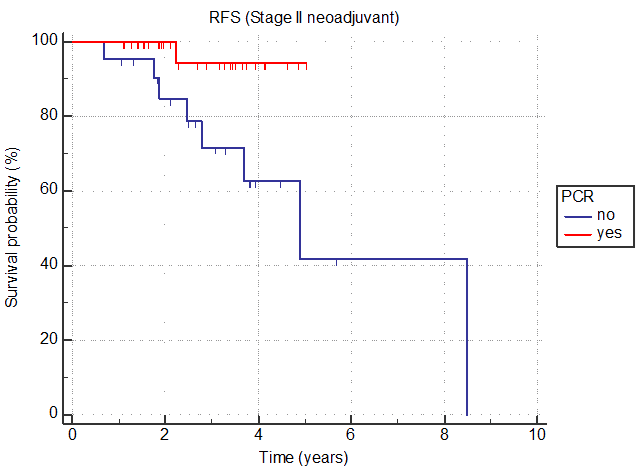
Figure 2: Difference in relapse-free survival based on pathologically complete response following neoadjuvant therapy for stage II patients (p=0.02). Note: PCR: Complete Pathological Response; RFS: Relapse-Free Survival
On the other hand, there was no difference in RFS based on MR complete response versus residual disease (6.4 vs. 8.5 years) (p=0.78), with 9.1% of patients with MR complete response experiencing relapse, compared to 13.3% without MRI complete response.
There was no difference in RFS for patients who experienced a delay in therapy. In fact, there was a trend toward longer RFS (8.0 vs. 6.6 years, p=0.08) in patients with treatment delays (Figure 3).
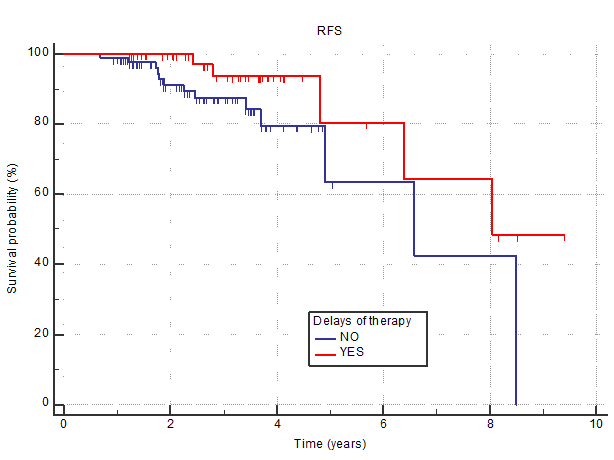
Figure 3: Difference in Relapse-Free Survival (RFS) based on whether delays of systemic therapy occurred (p=0.08). Note: RFS: Relapse-Free Survival
Although no difference in RFS was found based on histological type (p=0.18), none of the 12 patients with non- NST type had a recurrence during the follow-up. Median OS was not reached during the follow-up, with 9 patients (6.7%) passing during this period (Figure 2).
Discussion
According to our best knowledge this are the first RWD in this European region regarding this topic. Our institutional results demonstrate significant concordance with the published literature, confirming the value of current approaches to treating HER2-positive breast cancer. The analysis of 137 patients over an eight-year period allows for a thorough comparison with key studies and meta-analyses.
Patient characteristics and stage distribution
The distribution of stages in our cohort demonstrates a rational approach to treatment selection. The neoadjuvant group had more patients with T2 (51.7% vs. 25.0%) and T3 (14.1% vs. 1.9%) tumors, reflecting the appropriate use of neoadjuvant therapy in more advanced diseases. This distribution is consistent with the NCCN guideline recommendations that emphasize dual HER2 blockade for stage II-III disease [11].
Clinical and pathologic response rate
Our study finds a significant association between pre-surgery and post-neoadjuvant MRI results and the achievement of a Pathologic Complete Response (PCR). Notably, although 18.2% of patients demonstrated a complete MRI response, eight individuals still presented with residual disease. Conversely, 30% of those exhibiting residual disease subsequently achieved a PCR, illustrating that unexpected outcomes can happen in clinical practice. These results confirm findings from other studies that a radiological complete response is not predictive of a pathological complete response with sufficient accuracy to replace pathological evaluation after neoadjuvant treatment [12-14].
Our pCR rate of 56.5% in the neoadjuvant group reflects the excellence of modern treatment protocols. This rate fits perfectly within the range of published results from key studies. A Dutch multicenter analysis showed pCR rates of 41% with trastuzumab versus 65% with the dual blockade [15], while the German PRAEGNANT network reported 52.8% with the combination of pertuzumab and trastuzumab [16].
A meta-analysis of 9 randomized controlled trials involving 2,758 patients confirmed the superiority of dual HER2 blockade, showing a relative risk of 1.31 (95% CI: 1.21-1.43) in favor of the combination [17]. Our results confirm this finding, with a pCR rate of 61.3% in the dual blockade group versus 20.0% in the monotherapy group; however, statistical significance was not reached due to the small sample size (p=0.18).
The importance of HER2 expression we observed is also consistent with the literature. The Colombian study reported a significant association between HER2 3+ positivity and high pCR rates (OR=3.3; 95% CI=1.3-8.35; p=0.013), which mirrors our findings, where patients with HER2 3+ achieved a significantly higher pCR rate than those with HER2 2+ confirmed by FISH (p=0.003) [18].
Prognostic value of pCR
Our analysis showed a longer time to relapse in patients with pCR (8.5 vs. 6.3 years), with a statistically significant difference in stage II patients treated with neoadjuvant (not reached vs. 4.9 years, p=0.02). A large meta-analysis of 78 studies with 25,150 patients quantified the prognostic value of pCR in HER2-positive breast cancer. It showed that pCR predicted better EFS (HR 0.67, 95% CI 0.60-0.74), RFS (HR 0.69, 95% CI 0.57-0.83), and OS (HR 0.63, 95% CI 0.56-0.70). This meta-analysis also documented that the prognostic value of pCR was maintained over time, with 5- year rates showing HRs of 0.37 for EFS, 0.28 for RFS, and 0.26 for OS [15]. A Dutch cohort with a 10-year follow-up also confirmed the long-term benefit of achieving pCR, showing that patients with pCR had improved EFS (HR 0.48, 95% CI 0.31-0.73) and OS (HR 0.37, 95% CI 0.20-0.63) [7]. The CTNeoBC study, which included almost 12,000 patients, demonstrated that pathological complete response in both the breast and axillae was associated with improved disease-free survival and overall survival compared to pathological complete response only in the breast [19].
The NeoSphere trial found that patients who did not achieve a pathological complete response had a five-year disease-free survival rate of 75%. In contrast, those who did achieve a pathological complete response after receiving neoadjuvant dual HER2 blockade had a higher rate of 85% [4]. These findings were supported by the phase 2 TRYPHAENA trial, which demonstrated that combining neoadjuvant chemotherapy with dual HER2 blockade (trastuzumab plus pertuzumab) resulted in higher rates of pathological complete response, ranging from 55% to 64%, compared to chemotherapy with trastuzumab alone [20,21]. This benefit was even more pronounced in patients whose tumors were estrogen receptor-negative [21,22].
Hormone receptor status and prediction of response
Our distribution of 73.0% luminal HER2-positive vs. 27.0% HER2-positive hormone receptor-negative patients is consistent with the expected proportion. The Colombian study confirmed that ER positivity (OR=0.65, p=0.04) and PR positivity (OR=0.44, p=0.0001) were associated with lower pCR rates, which aligns with our findings of lower ER expression in patients with pCR (p=0.016) [18]. A Chinese registry of 353 patients also confirmed these predictive factors, showing that ER-negative, PR-negative, HER2 3+, and high Ki-67 index were associated with higher rates of pathological complete response (pCR). Their nomogram achieved an AUC of 0.73, indicating good predictive accuracy [9].
HER2-positive breast cancer exhibits considerable clinical and biological diversity, which means that not all patients respond to current treatments in the same way. Previous research has demonstrated that HER2-positive disease encompasses a range of molecular subtypes, including Luminal A, Luminal B, HER2-enriched, and basal-like [23-26]. Recent studies have found that HER2 heterogeneity occurs most frequently in HR-positive, HER2-positive tumors, with an incidence of approximately 10%, and is associated with lower rates of Pathologic Complete Response (pCR) [26,27].
Some HR+ HER2-positive breast cancer cells may rely predominantly on estrogen receptor (ER) signaling, with only limited activation of the HER2 pathway. As a result, these tumors tend to be less responsive to anti-HER2 therapies but may remain susceptible to endocrine treatments [28]. There is also a complex molecular signaling crosstalk between the HER2 and ER/PR pathways, which can lead to low sensitivity to neoadjuvant chemotherapy with dual anti- HER2 therapy in HR+HER2-positive patients [29].
Treatment tolerance and termination of therapy
Our treatment completion rate of 89.4% for planned taxanes in the neoadjuvant group, combined with only 4.4% of incomplete therapy in the adjuvant group, demonstrates excellent tolerability. We recorded treatment delays in 35.8% of patients, which is within the expected range for complex chemotherapy. Notably, these delays did not adversely affect outcomes, with a trend toward more prolonged RFS in patients with delays (8.0 vs. 6.6 years, p=0.08). While delays in neoadjuvant systemic chemotherapy were associated with an increased risk of death, there is also evidence that neutropenia in early breast cancer patients is an independent predictor of improved survival [30,31].
Long-term survival outcomes
Our median RFS of 8.0 years, with 13.1% of patients relapsing during follow-up, reflects excellent long-term outcomes. These results are comparable to those in published studies [4,32,33].
A significant finding is that none of the stage I patients relapsed during follow-up, supporting the excellent prognosis of early HER2-positive disease with modern treatment. This is in agreement with the APT study, which showed a 10-year invasive DFS of 93% in small, node-negative HER2-positive tumors treated with paclitaxel and trastuzumab [34].
The role of T-DM1 in adjuvant treatment
The use of T-DM1 in 14.8% of our patients reflects the gradual adoption of this drug following the publication of the KATHERINE trial results. This trial demonstrated that TDM1 is superior to trastuzumab in patients with residual disease after neoadjuvant treatment. Long-term follow-up of the KATHERINE trial with a median of 8.4 years demonstrated an absolute benefit in invasive DFS of 13.7% (80.9% vs. 67.1%) and an improvement in overall survival (89.1% vs. 84.4%). These results support our institutional protocols that include T-DM1 for patients with residual disease [23].
Effect of radiotherapy boost dose
Our study showed that the use of a boost dose of radiotherapy was associated with a shorter RFS (8.5 years vs. not reached, p=0.046) in patients who did not achieve a Pathological Complete Response (pCR). There are no randomized trials or extensive retrospective studies that have demonstrated an improvement in Recurrence-Free Survival (RFS) with a radiotherapy boost dose in patients with HER2- positive early breast cancer who did not achieve Pathological Complete Response (non-pCR) after neoadjuvant therapy. Furthermore, most studies evaluating the effect of boost radiotherapy have not stratified outcomes by pCR status or HER2 subtype [35-37]. The focus for these high-risk patients is on systemic therapy escalation rather than intensification of local radiotherapy.
Limitations and context
Our single-institution analysis has limitations in terms of generalizability; however, the results are highly consistent with the published literature, which enhances the reliability of our findings. The relatively short follow-up, with a median of 8 years, may limit the assessment of late recurrences, especially in hormone receptor-positive patients, where recurrences may occur later.
One of the significant disadvantages is the observational and retrospective nature of the study, as the results cannot be generalized to all of Croatia due to potential biases.
The evolution of treatment during the 8-year follow-up period may also influence the interpretation of the results, especially given the gradual introduction of pertuzumab and
T-DM1. Nevertheless, our results confirm the efficacy of modern protocols and support current guidelines.
Future perspectives
Our analysis suggests that some aspects of treatment could be further optimized. The unexpected finding of a shorter RFS in patients without pCR who received boost radiotherapy requires further validation and investigation of the underlying mechanisms.
Genomic diagnostics, such as the HER2DX test, are showing promise in optimizing treatment, with 48.1% of patients experiencing a change in treatment based on the test results [25]. These developments allow for more precise individualization of therapy in the future.
Conclusion
Overall, the results of our unique institutional analysis, which included monitoring 137 patients over eight years, clearly confirm the effectiveness of modern treatment protocols for HER2-positive breast cancer. The achieved rate of Pathological Complete Response (pCR) of 56.5% in the neoadjuvant group and 61.3% in the dual HER2 blockade group is consistent with the published results of key clinical trials. It confirms the superiority of combined anti-HER2 regimens. Long-term outcomes, with a median time to relapse of 8.0 years and a 13.1% relapse rate, demonstrate extraordinary sustainability of therapeutic effects and confirm the prognostic value of pCR for improved event-free survival and overall survival rates. The hormone receptorpositive subtype and heterogeneity of HER2 expression have proven to be significant predictors of response. Patients with a HER2 3+ reaction show a significantly higher likelihood of achieving a Pathological Complete Response (pCR), while ER-positive tumors less frequently achieve a full response.
Although the retrospective nature and unique institutional population are limitations, the consistency of our findings with extensive multicenter and meta-analytical studies reinforces the conclusion that contemporary neoadjuvant and adjuvant therapies for HER2-positive breast cancer significantly improve both short-term and long-term outcomes.
Strengths and Limitations of This Study
This are the first real-word data in this European region regarding this topic
• Overall, the results of our unique institutional analysis, which included monitoring 137 patients over eight years, clearly confirm the effectiveness of modern treatment protocols for HER2-positive breast cancer • The achieved rate of Pathological Complete Response (pCR) of 56.5% in the neoadjuvant group and 61.3% in the dual HER2 blockade group is consistent with the published results of key clinical trials. Long-term outcomes, with a median time to relapse of 8.0 years and a 13.1% relapse rate, demonstrate extraordinary sustainability of therapeutic effects and confirm the prognostic value of pCR for improved event-free survival and overall survival rates
• Although the retrospective nature and unique institutional population are limitations, the consistency of our findings with extensive multicenter and meta-analytical studies reinforces the conclusion that contemporary neoadjuvant and adjuvant therapies for HER2-positive breast cancer significantly improve both short-term and long-term outcomes
Author Contributions
All authors contributed equally to this research. All authors have read and agreed to the published version of the manuscript.
Funding
This research received no external funding.
Conflicts of Interest
The authors declare no conflicts of interest.
Data Availability Statement
The original contributions presented in the study are included in the article, further inquiries can be directed to the corresponding authors.
References
- Bray F, Laversanne M, Sung H. Global cancer statistics 2022: GLOBOCAN estimates of incidence and mortality worldwide for 36 cancers in 185 countries. CA Cancer J Clin. 2024;74:229-263.
[Crossref] [Google Scholar] [PubMed]
- Sharaf B, Tamimi F, Al-Abdallat H. Dual anti-HER2 therapy vs. trastuzumab alone with neoadjuvant anthracycline and taxane in HER2-positive early-stage breast cancer: Real-world insights. Biologics. 2025;19:59-71.
[Crossref] [Google Scholar] [PubMed]
- Gianni L, Eiermann W, Semiglazov V. Neoadjuvant and adjuvant trastuzumab in patients with HER2-positive locally advanced breast cancer (NOAH): Follow-up of a randomised controlled superiority trial with a parallel HER2-negative cohort. Lancet Oncol. 2018;19:e667.
[Crossref] [Google Scholar] [PubMed]
- Gianni L, Pienkowski T, Im YH. 5-year analysis of neoadjuvant pertuzumab and trastuzumab in patients with locally advanced, inflammatory, or early-stage HER2-positive breast cancer (NeoSphere): A multicentre, open-label, phase 2 randomised trial. Lancet Oncol. 2016;17:791-800.
[Crossref] [Google Scholar] [PubMed]
- Loibl S, André F, Bachelot T, Barrios CH, Bergh J, et al. Early breast cancer: ESMO Clinical Practice Guidelines for diagnosis, treatment and follow-up. Ann Oncol. 2024;35:159-182.
[Crossref] [Google Scholar] [PubMed]
- Tolaney SM, Tarantino P, Graham N. Adjuvant paclitaxel and trastuzumab for node-negative, HER2-positive breast cancer: Final 10-year analysis of the open-label, single-arm, phase 2 APT trial. Lancet Oncol. 2023;24:273-285.
[Crossref] [Google Scholar] [PubMed]
- Loibl S, Jassem J, Sonnenblick A. Adjuvant pertuzumab and trastuzumab in early human epidermal growth factor receptor 2-positive breast cancer in the APHINITY trial: Third interim overall survival analysis with efficacy update. J Clin Oncol. 2024;42:3643-3651.
[Crossref] [Google Scholar] [PubMed]
- Geyer Jr CE, Untch M, Huang CS. Survival with trastuzumab emtansine in residual HER2-positive breast cancer. N Engl J Med. 2025;392:249-257.
[Crossref] [Google Scholar] [PubMed]
- Yang ZJ, Xin F, Chen ZJ, Yu Y, Wang X, et al. Real-world data on neoadjuvant chemotherapy with dual-anti HER2 therapy in HER2 positive breast cancer. BMC Cancer. 2024;24:134.
[Crossref] [Google Scholar] [PubMed]
- Guan D, Jie Q, Wu Y, Xu Y, Hong W, et al. Real-world data on breast pathologic complete response and disease-free survival after neoadjuvant chemotherapy for hormone receptor-positive, human epidermal growth factor receptor-2-negative breast cancer: A multicenter, retrospective study in China. World J Surg Oncol. 2022;20:326.
[Crossref] [Google Scholar] [PubMed]
- NCCN. Breast Cancer. NCCN Clinical Practice Guidelines in Oncology (NCCN Guidelines®) Version 4.2025. Plymouth Meeting, PA: NCCN. 2025.
- Kuzmova M, Cullinane C, Rutherford C. The accuracy of MRI in detecting pathological complete response following neoadjuvant chemotherapy in different breast cancer subtypes. Surg Oncol. 2023;51:102011.
[Crossref] [Google Scholar] [PubMed]
- Weber JJ, Jochelson MS, Eaton A. MRI and prediction of pathologic complete response in the breast and axilla after neoadjuvant chemotherapy for breast cancer. J Am Coll Surg. 2017;225:740-746.
[Crossref] [Google Scholar] [PubMed]
- Janssen LM, den Dekker BM, Gilhuijs KGA, van Diest PJ, van der Wall E, et al. MRI to assess response after neoadjuvant chemotherapy in breast cancer subtypes: A systematic review and meta-analysis. NPJ Breast Cancer. 2022;8:107.
[Crossref] [Google Scholar] [PubMed]
- van der Voort A, Liefaard MC, van Ramshorst MS. Efficacy of neoadjuvant treatment with or without pertuzumab in patients with stage II and III HER2-positive breast cancer: A nationwide cohort analysis of pathologic response and 5-year survival. Breast. 2022;65:110-115.
[Crossref] [Google Scholar] [PubMed]
- Fasching PA, Hartkopf AD, Gass P. Efficacy of neoadjuvant pertuzumab in addition to chemotherapy and trastuzumab in routine clinical treatment of patients with primary breast cancer: A multicentric analysis. Breast Cancer Res Treat. 2019;173:319-328.
[Crossref] [Google Scholar] [PubMed]
- Wang C, Chen J, Xu X. Dual HER2 blockade in neoadjuvant treatment of HER2+ breast cancer: A meta-analysis and review. Technol Cancer Res Treat. 2020;19.
[Crossref] [Google Scholar] [PubMed]
- Rodríguez M, González DM, El-Sharkawy F, Castaño M, Madrid J. Complete pathological response in patients with HER2 positive breast cancer treated with neoadjuvant therapy in Colombia. Biomedica. 2023;43:396-405.
[Crossref] [Google Scholar] [PubMed]
- Cortazar P, Zhang L, Untch M. Pathological complete response and long-term clinical benefit in breast cancer: The CTNeoBC pooled analysis. Lancet. 2014;384:164-172.
[Crossref] [Google Scholar] [PubMed]
- Schneeweiss A, Chia S, Hickish T. Long-term efficacy analysis of the randomised, phase II TRYPHAENA cardiac safety study: Evaluating pertuzumab and trastuzumab plus standard neoadjuvant anthracycline-containing and anthracycline-free chemotherapy regimens in patients with HER2-positive early breast cancer. Eur J Cancer. 2018;89:27-35.
[Crossref] [Google Scholar] [PubMed]
- Wu XM, Qian YK, Chen HL, Hu CH, Chen BW. Efficacy and safety of anti-HER2 targeted therapy for metastatic HR-positive and HER2-positive breast cancer: A bayesian network meta-analysis. Curr Oncol. 2023;30:8444-8463.
[Crossref] [Google Scholar] [PubMed]
- Nakashoji A, Hayashida T, Yokoe T. The updated network meta-analysis of neoadjuvant therapy for HER2-positive breast cancer. Cancer Treat Rev. 2018;62:9-17.
[Crossref] [Google Scholar] [PubMed]
- Loibl S, Huang CS, Mano MS. Adjuvant trastuzumab emtansine in HER2-positive breast cancer patients with HER2-negative residual invasive disease in KATHERINE. NPJ Breast Cancer. 2022;8:106.
[Crossref] [Google Scholar] [PubMed]
- Sussell JA, Press DJ, Hansen SA, Kim E, du Toit Y, et al. Impact of pertuzumab and ado-trastuzumab emtansine on cumulative avoidance of recurrence among women treated for locally advanced, inflammatory, or early-stage nonmetastatic HER2-positive breast cancer in the United States. Adv Ther. 2023;40:3857-3874.
[Crossref] [Google Scholar] [PubMed]
- Guarneri V, Bras-Maristany F, Dieci MV. HER2DX genomic test in HER2-positive/hormone receptor-positive breast cancer treated with neoadjuvant trastuzumab and pertuzumab: A correlative analysis from the PerELISA trial. EBioMedicine. 2022;85:104320.
[Crossref] [Google Scholar] [PubMed]
- Filho OM, Viale G, Stein S. Impact of HER2 heterogeneity on treatment response of early-stage HER2-positive breast cancer: Phase II neoadjuvant clinical trial of T-DM1 combined with pertuzumab. Cancer Discov. 2021;11:2474-2487.
[Crossref] [Google Scholar] [PubMed]
- Tanei T, Seno S, Sota Y. High HER2 intratumoral heterogeneity is a predictive factor for poor prognosis in early-stage and locally advanced HER2-positive breast cancer. Cancers (Basel). 2024;16:1062.
[Crossref] [Google Scholar] [PubMed]
- Wang YC, Morrison G, Gillihan R. Different mechanisms for resistance to trastuzumab versus lapatinib in HER2-positive breast cancers--role of estrogen receptor and HER2 reactivation. Breast Cancer Res. 2011;13:R121.
[Crossref] [Google Scholar] [PubMed]
- Giuliano M, Trivedi MV, Schiff R. Bidirectional crosstalk between the estrogen receptor and human epidermal growth factor receptor 2 signaling pathways in breast cancer: Molecular basis and clinical implications. Breast Care (Basel). 2013;8:256-262.
[Crossref] [Google Scholar] [PubMed]
- de Melo Gagliato D, Lei X, Giordano SH. Impact of delayed neoadjuvant systemic chemotherapy on overall survival among patients with breast cancer. Oncologist. 2020;25:749-757.
[Crossref] [Google Scholar] [PubMed]
- Han Y, Yu Z, Wen S, Zhang B, Cao X, et al. Prognostic value of chemotherapy-induced neutropenia in early-stage breast cancer. Breast Cancer Res Treat. 2012;131:483-490.
[Crossref] [Google Scholar] [PubMed]
- Piccart M, Procter M, Fumagalli D. Adjuvant pertuzumab and trastuzumab in early HER2-positive breast cancer in the APHINITY trial: 6 years' follow-up. J Clin Oncol. 2021;39:1448-1457.
[Crossref] [Google Scholar] [PubMed]
- von Minckwitz G, Procter M, de Azambuja E. Adjuvant pertuzumab and trastuzumab in early HER2-positive breast cancer. N Engl J Med. 2017;377:122-131.
[Crossref] [Google Scholar] [PubMed]
- Tolaney SM, Guo H, Pernas S. Seven-year follow-up analysis of adjuvant paclitaxel and trastuzumab trial for node-negative, human epidermal growth factor receptor 2-positive breast cancer. J Clin Oncol. 2019;37:1868-1875.
[Crossref] [Google Scholar] [PubMed]
- Bartelink H, Maingon P, Poortmans P. Whole-breast irradiation with or without a boost for patients treated with breast-conserving surgery for early breast cancer: 20-year follow-up of a randomised phase 3 trial. Lancet Oncol. 2015;16:47-56.
[Crossref] [Google Scholar] [PubMed]
- Xie LX, Liu Y, Yang YG. Postoperative radiotherapy improves long-term survival in HER2-positive metastatic breast cancer: Real-world evidence from the latest SEER database. Breast Cancer Res Treat. 2025;211:489-500.
[Crossref] [Google Scholar] [PubMed]
- Kindts I, Laenen A, Depuydt T, Weltens C. Tumour bed boost radiotherapy for women after breast-conserving surgery. Cochrane Database Syst Rev. 2017;11:CD011987.
[Crossref] [Google Scholar] [PubMed]



 The Annals of Medical and Health Sciences Research is a monthly multidisciplinary medical journal.