
Understanding High-Functioning Depression: A Narrative Review of Diagnostic Challenges, Nosological Frameworks, and Clinical Implications
2 Faculty of Dentistry, College of Medicine, University of Nigeria, Enugu, Nigeria
3 Youth Health Action Network (YOHAN) Research Institute, Enugu, Nigeria
4 Department of Clinical Science, College of Medicine, University of Nigeria, Enugu, Nigeria
5 Sheffield Teaching Hospitals NHS Foundation Trust, UK
6 University of Rwanda, College of Medicine and Health Sciences, Kigali, Rwanda
7 Research Department, OLGnova, Kigali, Rwanda
8 Department of Health Information Management, School of Public Health, University of Port Harcourt, Port Harcourt, Nigeria
9 Department of Digital Health, European Campus Rottal-Inn, Deggendorf Institute of Technology, Pfarrkirchen, Germany
10 Department of Surgery, Surgery Interest Group Africa (SIGAF), Lagos, Nigeria
11 Department of Nursing Science, Osun State University, Osogbo, Nigeria
12 Faculty of Dentistry, University of Port Harcourt Teaching Hospital, Port Harcourt, Nigeria
13 Causeway Hospital Coleraine, Northern Ireland
14 Midyorkshire Teaching NHS trust, United Kingdom
15 University of Benin Teaching Hospital, Benin, Nigeria
16 Obafemi Awolowo University Teaching Hospital Complex, Ile-Ife, Nigeria
17 Department of Psychology, Imo State University, Owerri, Nigeria
Received: 08-May-2026, Manuscript No. Amhsr-26-189445; Editor assigned: 11-May-2026, Pre QC No. Amhsr-26-189445 (PQ); Reviewed: 25-May-2026 QC No. Amhsr-26-189445; Revised: 01-Jun-2026, Manuscript No. Amhsr-26-189445 (R); Published: 10-Jun-2026
Citation: Okereke PU, et al. Understanding High-Functioning Depression: A Narrative Review of Diagnostic Challenges, Nosological Frameworks, and Clinical Implications. Ann Med Health Sci Res. 2026;1130-1139
This open-access article is distributed under the terms of the Creative Commons Attribution Non-Commercial License (CC BY-NC) (http://creativecommons.org/licenses/by-nc/4.0/), which permits reuse, distribution and reproduction of the article, provided that the original work is properly cited and the reuse is restricted to noncommercial purposes. For commercial reuse, contact reprints@pulsus.com
Abstract
Background: High-Functioning Depression (HFD) refers to individuals who experience clinically significant depressive symptoms while maintaining outward functional competence in occupational, academic, and social domains. Despite growing recognition in clinical discourse, HFD remains absent from formal diagnostic systems such as the Diagnostic and Statistical Manual of Mental Disorders-5 (DSM-5) and International Classification of Diseases-11 (ICD-11), contributing to diagnostic ambiguity and therapeutic neglect.
Methods: A narrative review was conducted using PubMed, Science Direct, Google Scholar, the Cochrane Library, DOAJ, WHO reports, and African Journals Online (AJOL), incorporating literature published between 1st January 2010 and 31st December 2025. Search terms were supplemented with ICD-10, ICD-11, and standardized diagnostic tool terminology. Thematic synthesis was organized across four domains: (1) diagnostic ambiguity and nosological frameworks, including DSM-5, ICD-10, and ICD-11 criteria; (2) coping mechanisms and psychological resilience; (3) stigma and self-concealment; and (4) treatment approaches and adherence barriers.
Results: HFD is frequently underdiagnosed due to its non-disruptive presentation, sociocultural stigma, and internalized norms of self-reliance. Both DSM-5 and ICD-10 anchor diagnostic validity to functional impairment, inadvertently excluding this population; ICD-11 offers partial but insufficient improvement. Widely used assessment instruments, including the Beck Depression Inventory (BDI), Patient Health Questionnaire-9 (PHQ-9), and Hamilton Rating Scale for Depression (HAM-D), demonstrate a structural bias toward symptom-driven functional disruption, limiting their sensitivity for HFD. Cognitive-behavioural therapies, mindfulness based interventions, and lifestyle modifications demonstrate efficacy in subclinical depression but require tailoring to HFD profiles marked by perfectionism and emotional suppression. Pharmacological adherence is further complicated by diagnostic invalidation and stigma.
Conclusion: HFD challenges traditional models of psychiatric diagnosis and care delivery. Clinical systems must move beyond binary impairment criteria to recognize subthreshold, functionally masked mood disorders. Longitudinal and cross-cultural studies, alongside HFD specific psychometric tool development and nosological reform, are essential priorities for this underserved population.
Keywords
High-functioning depression; DSM-5; ICD-11; Narrative review; Stigma; Psychotherapy; Beck Depression Inventory; PHQ-9; Functional impairment; Diagnostic validity
Introduction
Depression remains a leading contributor to the global burden of disease, with the World Health Organization estimating a worldwide prevalence of 4.4%, disproportionately affecting women (5.1%) [1]. While Major Depressive Disorder (MDD) and Persistent Depressive Disorder (PDD, formerly dysthymia) are well-established within clinical taxonomies, a growing body of literature highlights a subtler yet pervasive clinical presentation, High-Functioning Depression (HFD), which lacks formal recognition in the Diagnostic and Statistical Manual of Mental Disorders, Fifth edition (DSM-5) and the International Classification of Diseases, Eleventh Revision (ICD-11) [2,3].
High-functioning depression (HFD) is an increasingly recognized presentation in psychiatric practice, though it remains diagnostically undefined [4]. High-functioning depression refers to individuals who exhibit chronic depressive symptoms, including anhedonia, persistent low mood, sleep disturbances, and cognitive fatigue, while maintaining outward functional competence in occupational, academic, and social domains [4]. Colloquially described as 'smiling depression' or 'covert depression,' HFD presents distinctive diagnostic and therapeutic challenges arising from its concealed nature and its intersection with cultural ideals of resilience and productivity [5-7].
Precise epidemiological estimates of HFD prevalence are currently unavailable, principally because the condition lacks operationalized diagnostic criteria in any major classification system. Emerging clinical literature suggests, however, that a clinically meaningful subset of individuals who present with depressive features do so in the context of preserved external functioning [4,5]. Epidemiological quantification remains contingent upon the development of consensus operational criteria and validated assessment instruments, gaps that this review aims to help address.
This narrative review synthesizes current evidence across four thematic domains: diagnostic ambiguity and nosological frameworks (including DSM-5, ICD-10, and ICD-11), coping mechanisms and psychological resilience, stigma and selfconcealment, and treatment approaches with their associated adherence barriers. In doing so, it highlights the critical need for structured recognition, validated measurement, and tailored intervention frameworks for this underserved population.
Material and Methods
Search strategy
A narrative review methodology was adopted to enable thematic synthesis across heterogeneous study designs. Literature searches were conducted across multiple databases, including PubMed, ScienceDirect, Google Scholar, the Cochrane Library, the Directory of Open Access Journals (DOAJ), World Health Organization (WHO) reports, and African Journals Online (AJOL). Supplementary manual searches were performed to capture grey literature and emerging perspectives.
Search terms
The search strategy employed combinations of the following keywords and their synonyms: 'high-functioning depression', 'functional depression', 'smiling depression', 'covert depression', 'subthreshold depression', 'diagnosis', 'DSM-5', 'ICD-10', 'ICD- 11', 'persistent depressive disorder', 'dysthymia', 'diagnostic criteria', 'societal stigma', 'self-concealment', 'help-seeking', 'treatment', 'psychotherapy', 'antidepressants', 'beck depression inventory', 'PHQ-9', 'HAM-D', 'screening tools', and 'functional impairment'.
Inclusion and exclusion criteria
Studies published between 1st January 2010 and 31st December 2025, in English, and addressing diagnostic frameworks, psychosocial factors, standardized assessment approaches, or therapeutic strategies relevant to HFD or subthreshold depressive presentations were included. Given the absence of a formal HFD diagnostic code, studies examining analogous constructs, including subclinical depression, dysthymia, and high-functioning psychopathology, were incorporated where directly relevant. Foundational references predating 2010 (e.g., original validation studies for assessment instruments) were included where their inclusion was necessary for scientific completeness. Studies focused on unrelated mental health conditions or published in languages other than English were excluded.
Data synthesis
Selected studies were reviewed and thematically synthesized into four core domains:
- Diagnostic ambiguity and nosological frameworks: This domain examines the limitations of DSM-5, ICD-10, and ICD-11 criteria in capturing HFD, including the role of functional impairment as a diagnostic threshold, nosological overlap with adjacent conditions, and the psychometric validity of standardized depression assessment tools for this population.
- Coping mechanisms and psychological resilience: Many individuals with HFD employ adaptive strategies (e.g., sublimation, compartmentalization, and overcommitment) that enable maintained functionality despite internal distress, thereby masking symptom severity and delaying clinical recognition.
- Stigma and self-concealment: Cultural and societal pressures, combined with internalized stigma and norms of self-reliance, lead many individuals to underreport or minimize their symptoms, further complicating diagnosis and delaying treatment engagement.
- Treatment approaches and adherence barriers: This domain examines the evidence base for pharmacological and psychotherapeutic interventions applicable to HFD, encompassing CBT, mindfulness-based approaches, acceptance and compassion-focused therapies, pharmacotherapy, and workplace and lifestyle interventions, alongside barriers to adherence inherent in functionally preserved individuals.
Results
Diagnostic ambiguity and overlapping disorders
DSM-5 and the functional impairment paradox
High-Functioning Depression (HFD) lacks formal recognition in the DSM-5, complicating both clinical identification and epidemiological tracking. Despite meeting several core criteria for depression, including anhedonia, persistent low mood, and fatigue, individuals with HFD maintain a level of outward functionality that may disqualify them from a diagnosis of Major Depressive Disorder (MDD) or PDD under current frameworks [8-10]. This disconnect reflects a broader limitation in psychiatric nosology, where symptom severity has historically been conflated with visible functional impairment.
HFD frequently shares features with adjacent psychological conditions, including dysthymia, generalized anxiety disorder, occupational burnout, and bipolar II disorder, increasing the risk of misdiagnosis or diagnostic overshadowing. While generalized anxiety disorder is characterized by predominantly future-oriented worry, HFD presents with a pervasive low mood and internalized distress that is not situationally bound. Burnout is typically context-specific and occupationally localized, whereas HFD symptoms persist across domains and often lack a clearly identifiable precipitant [11-13].
The DSM-5's categorical criteria for depressive disorders, emphasizing functional disruption, episode duration, and distress thresholds, do not sufficiently account for patients who internalize symptoms or compensate through productivity. As a result, many cases of HFD are either undiagnosed or misattributed to personality traits, normative stress, or lifestyle fatigue. This diagnostic gap carries practical implications, from delayed treatment and inadequate insurance coverage to underrepresentation in mental health epidemiology. As presented in Table 1, current DSM-5 criteria fail to accommodate functionally preserved depressive presentations, contributing to systematic underrecognition of HFD.
| Diagnostic System | Criterion/Domain | Relevance to HFD | Implication for HFD | Reference |
|---|---|---|---|---|
| DSM-5 | Duration (MDD ≥ 2 weeks; PDD ≥ 2 years) | HFD may be chronic yet persistently subthreshold in symptom count | Prolonged subclinical presentations are excluded | [9,12] |
| DSM-5 | Depressed mood as core criterion | HFD individuals frequently mask or suppress low mood | Self-report instruments underestimate true symptom burden | [10] |
| DSM-5 | Functional impairment required for diagnosis | HFD individuals maintain occupational and social functioning | Core diagnostic criterion cannot be met; cases systematically excluded | [5,11] |
| DSM-5 | Clinically significant distress threshold | Many with HFD normalize or rationalize symptoms as stress | Distress minimization leads to diagnostic exclusion | [5] |
| DSM-5 | Comorbidity recognition | DSM-5 permits coexisting disorders but lacks granularity for subclinical states | HFD overlaps with anxiety, burnout, and non-episodic mood disturbance without dedicated category | [11,14] |
| ICD-10 | Depressive episode severity (F32.0-F32.3): symptom countbased stratification | Mild episodes require ma and selfconcealment 4 symptoms and some functional reduction | Similar functional impairment anchoring to DSM-5; HFD presentations risk exclusion | [15] |
| ICD-10 | Dysthymia (F34.1): ≥ 2 years low mood | Closest ICD-10 analog to HFD; still requires occupational/social effects | Partial capture of chronic subthreshold presentations; functional criterion persists | [15] |
| ICD-11 | Mild depressive episode without required symptoms (6A70.00): dimensional flexibility | Greater tolerance for atypical symptom profiles and subthreshold burden | HFD still lacks explicit categorization; functional impairment remains implicit benchmark | [16] |
| ICD-11 | Course and severity specifiers (persistent, recurrent, residual symptom) | Allows nuanced longitudinal characterization of mood disorder trajectories | Offers improved but incomplete framework for functionally preserved chronic presentations | [16] |
Table 1: Diagnostic mismatch: DSM-5, ICD-10, and ICD-11 criteria versus high-functioning depression.
ICD-10 and ICD-11: An international nosological perspective
The ICD-10 classifies depressive episodes under codes F32 (single episode) and F33 (recurrent depressive disorder), stratified into mild (F32.0), moderate (F32.1), and severe (F32.2/F32.3) presentations based on symptom count and associated severity [15]. Dysthymia is classified under F34.1, requiring persistent depressed mood for a minimum of two years. While the ICD-10 offers broader symptom severity gradations than the DSM-5's binary distinction between MDD and PDD, it retains functional impairment as an implicit diagnostic expectation: even mild depressive episodes under ICD-10 require an associated reduction in daily functioning, a criterion that risks excluding HFD presentations in which symptom endurance rather than functional decline is the defining feature [15].
The ICD-11, effective globally since January 2022, represents a meaningful evolution in depressive disorder classification [16]. Its dimensional approach partially decouples symptom severity from functional impairment. Specifically, the category 'mild depressive episode without required symptoms' (code 6A70.00) accommodates presentations that do not fulfill conventional symptom thresholds but generate clinically significant psychological distress [16]. Furthermore, ICD-11's attention to course specifiers, including persistent depressive disorder, recurrent patterns, and residual symptom states, allows more nuanced longitudinal characterization of mood disorder trajectories, which is of direct relevance to the chronic, masked presentations typical of HFD [16].
Despite these advances, HFD as a formalized diagnostic entity remains absent from ICD-11, and the framework continues to implicitly benchmark diagnosis against observable functional disruption. The transition from ICD-10 to ICD-11 therefore represents a partial, though insufficient, step toward capturing functionally masked depressive states. Its growing adoption across non-Western and lower-resource healthcare systems renders ICD-11 of particular importance to international HFD discourse, as cultural variation in the expression of depressive symptoms and help-seeking may be more adequately contextualized within its flexible dimensional framework [15,16].
Standardized assessment tools and their diagnostic validity for HFD
Widely used psychometric instruments for depression were largely developed and validated in clinically diagnosed populations, and their application to HFD introduces specific measurement limitations that deserve explicit consideration. The Beck Depression Inventory (BDI), first published in 1961 and subsequently revised as the BDI-II, is among the most extensively validated self-report measures for depressive symptom severity across clinical and research settings [17].
However, the BDI's reliance on patient self-endorsement renders it susceptible to the minimization bias characteristic of HFD: individuals who habitually normalize or suppress their internal distress may systematically underreport on self-completion instruments, producing scores in the minimal-to-mild range that fail to reflect true psychopathological burden [5,17]. The BDI's cognitive-affective subscale items, including selfblame, pessimism, and loss of pleasure, may partially capture internal distress independent of functional performance, but the instrument as a whole is not calibrated for the concealment patterns of HFD.
The Patient Health Questionnaire-9 (PHQ-9), a widely administered primary care screening tool derived from DSMIV criteria, includes a final item assessing the degree to which depressive symptoms 'have made it difficult to do your work, take care of things at home, or get along with other people' [17]. Individuals with HFD, by definition, maintain output in precisely these domains, and may therefore score low on this item irrespective of the subjective severity of their distress. This functional impairment item introduces a structural scoring bias that may systematically exclude HFD from accurate PHQ-9 case identification, attenuating total scores below clinically actionable thresholds despite significant underlying symptomatology [17].
The Hamilton Rating Scale for Depression (HAM-D), a clinician-administered structured interview, partially mitigates self-report limitations by incorporating observable behavioral signs, including psychomotor retardation, sleep disturbance profiles, and somatic complaints [17]. A skilled clinician using the HAM-D may identify depressive features that a self-completing patient would minimize. Nevertheless, HAM-D items assessing work and activities, and those reliant on patient self-disclosure during interview, retain a risk of underestimation when the respondent is accustomed to concealing distress in interpersonal contexts. The Montgomery-Åsberg Depression Rating Scale (MADRS) offers similar strengths and analogous limitations, with particular sensitivity to mood-related symptoms but continued vulnerability to endorsement suppression in highfunctioning individuals [17].
Collectively, these instruments share a structural alignment with the diagnostic frameworks from which they were derived, anchoring clinical significance to functional disruption and symptom endorsement. This alignment limits their sensitivity for HFD. Future psychometric development should prioritize the assessment of internal distress, emotional suppression, compensatory coping patterns, and subjective quality of life, independent of observable functional performance. Validated screening instruments specifically designed for HFD do not yet exist and represent a critical gap in clinical measurement science.
Coping mechanisms and psychological resilience
Individuals with HFD frequently develop coping mechanisms that mask their depressive symptoms, rendering the condition difficult to detect externally. A consistent pattern in the literature reveals that such individuals rely heavily on sublimation, the conversion of emotional distress into socially valued activities such as occupational achievement, caregiving, or academic excellence [13,14]. While superficially adaptive, this mechanism functions as a psychological defense that obscures underlying distress and delays clinical recognition of depressive states. The apparent productivity of individuals with HFD may be misread by clinicians and social contacts alike as an indicator of psychological health, rather than recognized as a compensatory response to internal suffering.
This form of coping is often mistaken for genuine well-being. In reality, it reflects a high degree of internal conflict in which the outward performance of function and the inward experience of distress coexist in sustained tension [4,5,13]. The reliance on routines, achievements, and caregiving roles to manage depressive symptoms can produce a fragile equilibrium: while enabling short-term maintenance of functioning, these strategies deplete psychological resources over time, particularly under conditions of intensified external demand. The apparent resilience of individuals with HFD thus frequently belies the structural fragility of their coping architecture.
Over time, the cumulative psychological toll of sustained compensatory effort may result in burnout, emotional blunting, or clinical decompensation [4,18,19]. These transitions may be sudden and unexpected, with individuals presenting in acute crisis despite years of apparent stability. The delayed recognition of these deterioration trajectories, particularly by healthcare providers undertrained in subclinical mood presentations, contributes to preventable suffering and missed intervention opportunities. The risk of decompensation underscores that HFD is not a benign or self-limiting presentation, but a condition carrying substantive longitudinal risk [4].
Stigma and self-concealment
A consistent theme across the literature is the central role of social and internalized stigma in delaying help-seeking and clinical recognition of HFD. Many individuals internalize cultural ideals of independence, emotional stoicism, and high performance, leading them to construe depressive symptoms as personal weakness rather than legitimate health impairment [20-22]. This internalized stigma not only deters help-seeking but actively reinforces self-concealment and symptom minimization, creating a self-perpetuating barrier to clinical engagement.
Particularly in high-pressure environments, corporate sectors, academic institutions, medicine, and caregiving, there exists an implicit social expectation to perform regardless of personal adversity. As a result, individuals with HFD may actively deny their emotional needs, rationalize symptoms as normative occupational stress, or fear professional or social repercussions if they disclose their struggles [23,18]. Masculine norms of stoicism and self-sufficiency additionally constrain help-seeking in men, while high-achieving women may be subject to perfectionismreinforcing social scripts that similarly discourage disclosure [24].
This self-concealment contributes to a cycle of silence in which symptoms intensify progressively while external presentations remain intact [23,25,26]. The longer HFD remains unrecognized and untreated, the more likely it is to evolve into a clinically severe mood disorder, thereby validating the urgent need for early identification strategies and culturally informed intervention frameworks. Notably, the 'successful but suffering' paradox, in which life circumstances appear objectively stable, may be associated with increased risk of suicidal ideation, as the absence of apparent precipitants renders distress particularly bewildering and self-invalidating [25,26] (Figure 1).
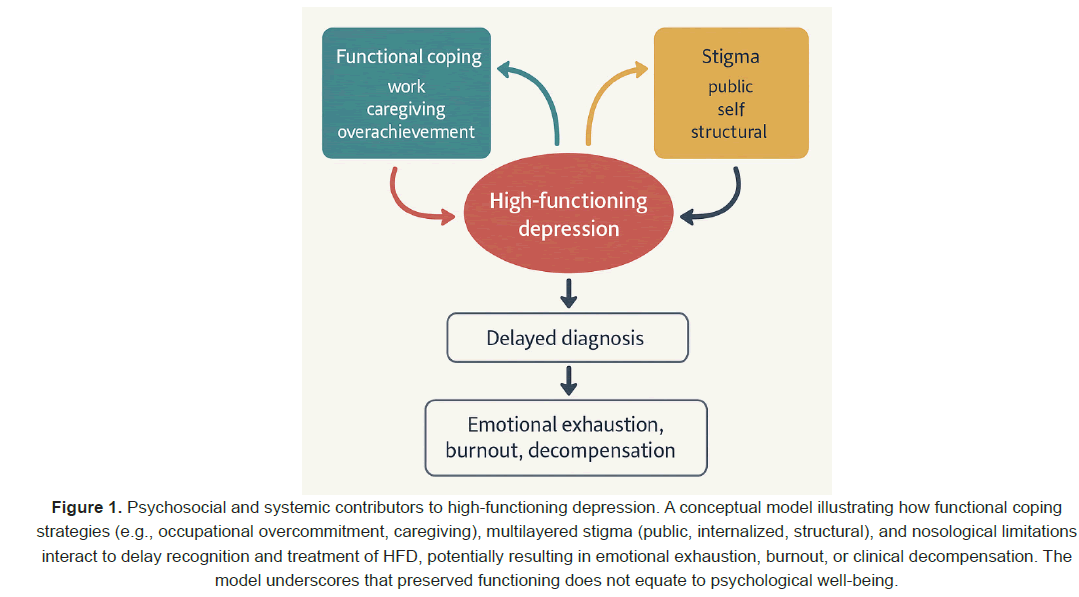
Figure 1: Psychosocial and systemic contributors to high-functioning depression. A conceptual model illustrating how functional copingstrategies (e.g., occupational overcommitment, caregiving), multilayered stigma (public, internalized, structural), and nosological limitations interact to delay recognition and treatment of HFD, potentially resulting in emotional exhaustion, burnout, or clinical decompensation. The model underscores that preserved functioning does not equate to psychological well-being.
Treatment approaches and adherence barriers in HFD
The evidence base for treating HFD is largely extrapolated from trials conducted in clinically diagnosed depressive populations, given the absence of HFD-specific Randomized Controlled Trials (RCTs). Nevertheless, several therapeutic modalities demonstrate transferable relevance, particularly those targeting the cognitive and emotional patterns most characteristic of highfunctioning individuals, including perfectionism, rumination, emotional suppression, and self-critical schematic processing.
Psychotherapeutic interventions
Cognitive-Behavioral Therapy (CBT) is the most extensively evaluated psychotherapeutic intervention for depressive disorders and has demonstrated efficacy across mild-to-moderate presentations including subclinical depressive states [26-,28]. For HFD specifically, CBT's emphasis on restructuring maladaptive cognitions, such as achievement-contingent self-worth, catastrophizing personal failure, and avoidance of vulnerability, renders it conceptually well-suited. However, the therapeutic alliance requires careful calibration: many individuals with HFD may resist pathologizing framings of their experience, exhibiting ambivalence toward treatment that is amplified by their apparent functional success [5,27]. Rumination-focused CBT and behavioural activation variants may be particularly applicable in targeting the repetitive negative self-evaluation and passive withdrawal patterns common in HFD [27].
Mindfulness-Based Cognitive Therapy (MBCT), developed originally to reduce depressive relapse, cultivates metacognitive awareness of automatic ruminative processes and disengages automatic negative thinking from emotional reactivity [29]. Preliminary evidence supports utility in subthreshold depressive states and among individuals with residual depressive symptoms following partial remission [29]. MBCT's non-stigmatizing, skills-based framing may be particularly accessible to HFD individuals who resist medicalizing framings. Acceptance and Commitment Therapy (ACT) and Compassion-Focused Therapy (CFT) represent adjunctive approaches with growing empirical support [29]. ACT's emphasis on psychological flexibility and values-consistent action aligns well with HFD profiles marked by experiential avoidance, while CFT directly addresses the harsh self-criticism and shame that are salient features of many high-functioning individuals [29].
Pharmacological management
Selective Serotonin Reuptake Inhibitors (SSRIs) and Serotonin- Noradrenaline Reuptake Inhibitors (SNRIs) are recommended as first-line pharmacological treatments for moderate-to-severe depressive disorders by international guidelines, including those issued by the National Institute for Health and Care Excellence (NICE) and the British Association for Psychopharmacology (BAP) [28,30]. However, their effectiveness in functionally preserved individuals with mild-to-moderate subjective distress remains equivocal [31]. Meta-analytic evidence consistently demonstrates a positive benefit-to-harm ratio for antidepressants in moderate-to-severe presentations, with attenuated effect sizes in milder clinical presentations, a category within which HFD often falls [31,32].
Adherence to antidepressant regimens poses a distinct challenge in HFD populations. Given that many individuals do not perceive themselves as clinically unwell, motivation for sustained pharmacological treatment is often diminished [33]. Anticipatory stigma regarding the use of psychiatric medication, concerns about emotional numbing, and difficulties reconciling a self-concept anchored in competence with patient identity may further undermine adherence [33,34]. Pharmacotherapy in HFD should therefore be approached judiciously, reserved for presentations with clinically significant distress or comorbid conditions, and integrated within multimodal treatment frameworks that incorporate psychoeducation, stigma-reduction strategies, and concurrent psychotherapeutic support [28,30].
Workplace and lifestyle interventions
Given that many individuals with HFD maintain active employment, workplace-based mental health programmes represent a strategically accessible, destigmatized care pathway. Employer-sponsored Employee Assistance Programmes (EAPs), psychoeducational initiatives, flexible working arrangements, and accessible on-site or remote counselling services offer feasible touchpoints for early identification and low-threshold support [35,36]. Organizational-level interventions targeting psychosocial work environments have demonstrated modest improvements in mental health outcomes in controlled studies, although effect sizes are variable and context-dependent [37].
Lifestyle-based interventions confer additional benefit and may be particularly palatable to individuals reluctant to engage formal mental health services. Physical activity demonstrates a dose-dependent association with reduced depressive symptom burden in both clinical and subclinical populations, mediated through neurobiological mechanisms including Brain-Derived Neurotrophic Factor (BDNF) upregulation, hypothalamic-pituitary-adrenal axis modulation, and endorphin release [38,39]. Adherence to a Mediterranean dietary pattern has been prospectively associated with reduced depression incidence, with antiinflammatory and microbiome-mediated pathways proposed as plausible mechanisms [40,41]. Structured social support, both in-person and through validated online modalities, has shown benefit in subclinical mood presentations, though evidence quality remains variable [42,43]. Table 2 provides a consolidated summary of the treatment modalities reviewed, their proposed mechanisms, evidence appraisal in HFDrelevant populations, and key limitations.
| Intervention | Proposed mechanism | Evidence in HFD/subthreshold depression | Key limitations | Reference |
|---|---|---|---|---|
| CBT (Cognitive-Behavioural Therapy) | Restructures negative cognitive schemas and maladaptive thought patterns | Effective in mild-to-moderate and subclinical presentations; conceptually well-suited to HFD perfectionism | Requires motivation and openness to treatment; HFD patients may resist clinical framing of self as unwell | [27,28] |
| MBCT (Mindfulness-Based Cognitive Therapy) | Cultivates metacognitive awareness; decouples ruminative thought from emotional reactivity | Promising in subthreshold and residual depression; nonstigmatizing framing may enhance acceptability | Requires sustained practice and self-discipline; limited HFD-specific trial data | [29] |
| ACT (Acceptance and Commitment Therapy) | Promotes psychological flexibility and values-consistent action; reduces experiential avoidance | Useful for perfectionistic, avoidant HFD profiles; addresses emotional suppression | Limited randomized evidence in HFD-specific cohorts; implementation fidelity varies | [44] |
| CFT (Compassion-Focused Therapy) | Targets self-criticism and shame; cultivates self-compassion | Directly addresses the harsh selfcritical schemas common in HFD; growing evidence base | Limited large-scale RCTs; requires therapeutic training in compassionbased methods | [44] |
| SSRIs/SNRIs | Serotonin and/or noradrenaline reuptake inhibition; neuroplasticity effects | Mixed evidence in mild-to-moderate presentations; effect sizes smaller than in severe depression | Adherence compromised by diagnostic dis identification and stigma; side effect burden (sexual dysfunction, emotional blunting) may deter continuation | [31,32,33,34] |
| Physical activity | BDNF upregulation, Hypothalamic-Pituitary-Adrenal (HPA) axis modulation, endorphin release, antiinflammatory effects | Dose-dependent reduction in depressive symptoms in subclinical populations; broadly accessible | Adherence variable without structured programming; evidence predominantly from non-HFD samples | [38,39] |
| Mediterranean diet | Anti-inflammatory, gut-microbiomemediated pathways; nutrient cofactors in neurotransmitter synthesis | Prospectively associated with lower depression incidence; feasible adjunct for non-pharmacological care | Primarily observational evidence; dietary confounders and adherence measurement challenges | [40,41] |
| Workplace/EAP Interventions | Stigma reduction, accessible support touchpoints, organizational psychosocial environment improvement | Strategically accessible for employed HFD individuals; psychoeducation may facilitate early identification | Effect sizes variable; uptake constrained by confidentiality concerns and stigma within workplace cultures | [35,36,37] |
Table 2: Summary of treatment modalities relevant to high-functioning depression.
Figure 2 proposes a structured decision tree to guide clinicians in identifying HFD in outpatient settings. The flowchart begins with screening for core depressive symptoms, such as sadness or fatigue, followed by an assessment of symptom duration. Importantly, the decision tree avoids assuming that preserved functionality negates psychiatric morbidity. Instead, it recommends that clinicians evaluate whether apparent functionality may conceal distress and urges investigation into compensatory coping behaviors (e.g., perfectionism, emotional suppression). This model is particularly relevant for primary care physicians, mental health professionals, and occupational health clinicians working with high-achieving or non-disclosing individuals.
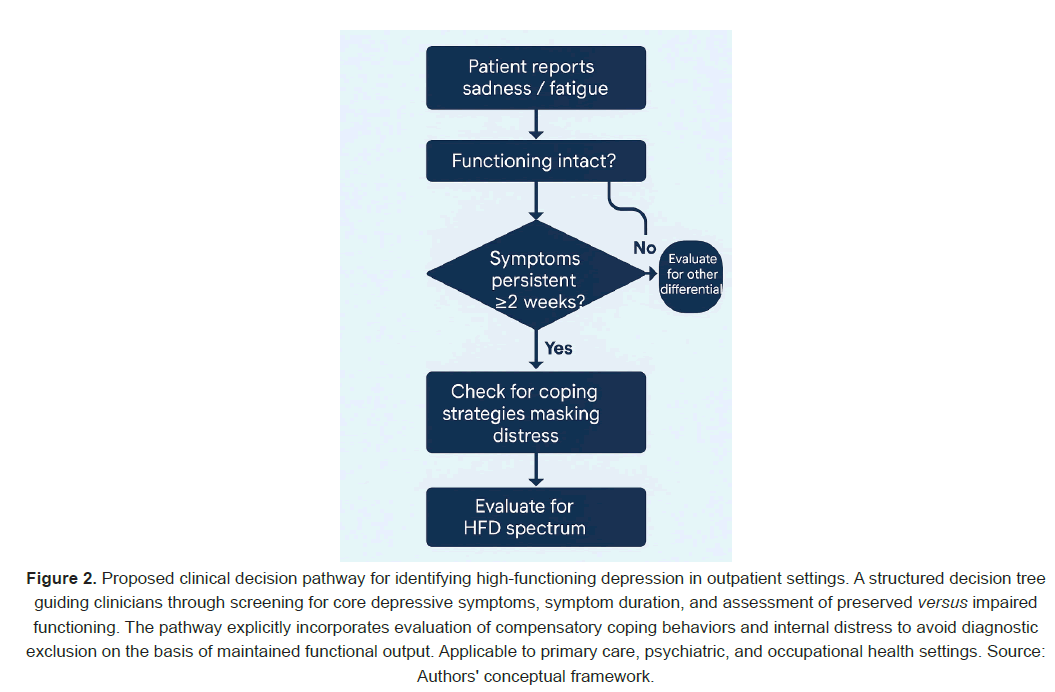
Figure 2: Proposed clinical decision pathway for identifying high-functioning depression in outpatient settings. A structured decision tree guiding clinicians through screening for core depressive symptoms, symptom duration, and assessment of preserved versus impaired functioning. The pathway explicitly incorporates evaluation of compensatory coping behaviors and internal distress to avoid diagnostic exclusion on the basis of maintained functional output. Applicable to primary care, psychiatric, and occupational health settings. Source: Authors' conceptual framework.
Finally, the absence of longitudinal data on the trajectory of HFD leaves significant knowledge gaps. Future studies should explore whether HFD acts as a precursor to MDD, how it evolves over time, and what psychosocial or neurobiological markers distinguish it from other mood disorders. Similarly, research is needed on differential treatment responses in HFD and how interventions can be individualized across gender, race, and occupational categories.
Discussion
This narrative review synthesizes evidence across four interrelated domains, nosological frameworks and diagnostic ambiguity, coping mechanisms, stigma and self-concealment, and treatment approaches, to characterize the clinical and societal landscape of HFD. The convergence of findings across these domains reveals a condition shaped as much by structural features of psychiatric classification and sociocultural expectation as by individual psychopathology.
The fundamental nosological challenge to recognizing highfunctioning presentations of the disorder lies in how major diagnostic systems operationalize validity. Both DSM-5 and ICD-10 tie diagnostic status to demonstrable functional impairment, a criterion that inadvertently excludes individuals with preserved-function presentations from meeting threshold criteria [8,9,15]. While ICD-11 introduces greater dimensional flexibility and partially accommodates subthreshold cases through the 6A70.00 categories, it stops short of codifying highfunctioning presentations as a distinct entity. Consequently, despite ICD-11’s structural advances, the international classification systems collectively miss an opportunity to align on a diagnosis that would capture these excluded presentations [16] The analysis of widely used assessment tools, BDI, PHQ- 9, and HAM-D, demonstrates that dominant psychometric instruments inherit the same functional-impairment bias as the nosological systems from which they were derived [16,17,45]. This creates a self-reinforcing cycle: instruments calibrated to detect symptom-driven functional disruption are deployed within frameworks that exclude preserved-function presentations, compounding clinical invisibility at every assessment juncture.
The coping mechanisms characteristic of HFD, sublimation, overcommitment, and emotional compartmentalization, are paradoxically adaptive in the short term while serving to entrench diagnostic delay and symptomatic chronicity [12,13]. These patterns are sustained and rewarded by sociocultural environments that conflate productivity with psychological health and stigmatize emotional disclosure [16,17,19]. The interplay between internal coping and external stigma creates the diagnostic paradox at the heart of HFD: the better an individual performs, the less likely they are to be identified as suffering. This paradox is particularly acute in high-achieving occupational groups, wherein the 'successful but suffering' presentation may carry an elevated risk of suicidal ideation despite apparently stable life circumstances [25,26].
Treatment for HFD remains constrained by the same structural gaps that impede diagnosis. Evidence for psychotherapeutic and pharmacological interventions is extrapolated rather than derived from HFD-specific trials. Adherence to pharmacotherapy is particularly fragile in the absence of diagnostic validation, and the self-critical schematic processing characteristic of HFD may paradoxically intensify when individuals perceive their distress as evidence of personal failure rather than clinical pathology [31,34]. Psychotherapeutic approaches addressing these specific cognitive-emotional patterns, including rumination-focused CBT, ACT, and CFT, offer theoretical and preliminary empirical promise [27,44]. Lifestyle and workplace interventions represent destigmatized access points but require further empirical development within HFD-specific populations [35,39].
A notable finding of this review is that the evidence base for HFD is predominantly derived from high-income, Western settings. The manifestation, help-seeking trajectories, and social determinants of HFD are likely to differ substantially across cultural contexts, particularly in sub-Saharan Africa, South Asia, and Latin America, where collectivist social norms, lower mental health literacy, and under-resourced healthcare systems may differentially shape symptom expression, stigma, and care access [33,43]. This geographic and cultural limitation of the existing literature is an important consideration for international clinical applicability.
Implications and directions for future research
The findings of this review carry implications across clinical practice, health systems, and research priority-setting. For clinicians, awareness of HFD presentations, characterized by preserved functioning, symptom minimization, and compensatory coping, should inform screening approaches, particularly when working with high-achieving occupational groups, caregivers, and individuals presenting with somatic complaints without identifiable organic cause. The clinical interview should systematically complement standardized tools such as the PHQ-9 with inquiry into internal distress experience and coping patterns, independent of functional output.
At the nosological level, forthcoming revisions to DSM and ICD frameworks would benefit from the incorporation of dimensional severity specifiers that decouple diagnostic validity from functional output. The precedent set by ICD-11's 6A70.00 category offers a partial template, but explicit acknowledgment of functionally preserved depressive presentations is needed [16]. The development and psychometric validation of HFD-specific screening instruments, calibrated to assess internal distress, emotional suppression, and compensatory coping independent of functional performance, represents the most urgent empirical priority in this field.
Longitudinal prospective studies are needed to characterize the natural history of HFD: Whether it constitutes a stable clinical phenotype, a prodromal trajectory toward MDD, or a dynamic adaptation with fluctuating severity over time. Cross-cultural research, particularly from low- and middle-income regions, will be essential to understand how sociocultural context modulates HFD expression, help-seeking, and treatment responsiveness. Finally, RCTs specifically recruiting HFD-operationalized samples are required to establish evidence-based intervention protocols, moving beyond extrapolation from general depressive disorder populations.
Conclusion
High-functioning depression is a clinically significant form of depressive psychopathology that often goes unrecognized because individuals maintain observable functioning, work performance, and social roles despite experiencing persistent internal distress. This invisibility is structurally produced by diagnostic systems and measures that largely equate disorder with overt functional impairment, creating a blind spot in which substantial suffering is masked by the performance of wellness. Advancing recognition and care will require developing assessment tools sensitive to self-concealed symptoms, investing in longitudinal studies to clarify the course, risk, and outcomes of these presentations, and expanding cross-cultural research to ensure the construct is valid and applicable beyond Western contexts.
Limitation
This review is subject to several important limitations. The absence of a formal ICD or DSM diagnostic code for HFD means that studies were not identified through a standardized diagnostic category, introducing potential selection bias in literature retrieval and constraining synthesis reproducibility. The narrative, rather than systematic, methodology precludes formal meta-analytic effect size quantification and limits the generalizability of effectiveness conclusions. Restriction to English-language publications limits representativeness, particularly regarding cultural variation in HFD expression. Additionally, the evidence base remains insufficiently representative of low- and middle-income settings, and the majority of referenced trials were not designed specifically for HFD populations.
References
- Kazdin AE. Encyclopedia of psychology. Washington, DC: American Psychological Association; 2000.
- American Psychological Association (APA). Depression. 2025.
- Ferrari AJ, Charlson FJ, Norman RE, Patten SB, Freedman G, Murray CJ, et al. Burden of depressive disorders by country, sex, age, and year: Findings from the global burden of disease study 2010. PLoS Medicine. 2013;10(11):e1001547.
[Crossref] [Google Scholar] [PubMed]
- Rottenberg J, Devendorf AR, Kashdan TB, Disabato DJ. The curious neglect of high functioning after psychopathology: The case of depression. Perspectives on Psychological Science. 2018;13(5):549–566.
[Crossref] [Google Scholar] [PubMed]
- Joseph JF, Tural U, Joseph ND, Mendoza TE, Patel E, Reifer R, et al. Understanding high-functioning depression in adults. Cureus. 2025;17(2).
[Crossref] [Google Scholar] [PubMed]
- Okereke PU, Umeh CV, Okereke WO, Ndayambaje E, Obetta CC, Uzor OF, et al. High-functioning depression: A hidden burden demanding clinical recognition. BJPsych Bulletin. 2026;50(2):111-113.
[Crossref] [Google Scholar] [PubMed]
- Mesman E, Vreeker A, Hillegers M. Resilience and mental health in children and adolescents: An update of the recent literature and future directions. Current Opinion in Psychiatry. 2021;34(6):586–592.
[Crossref] [Google Scholar] [PubMed]
- Baumeister RF, Dale K, Sommer KL. Freudian defense mechanisms and empirical findings in modern social psychology: Reaction formation, projection, displacement, undoing, isolation, sublimation, and denial. Journal of Personality. 1998;66(6):1081–1124.
[Crossref] [Google Scholar] [PubMed]
- Kim E, Zeppenfeld V, Cohen D. Sublimation, culture, and creativity. Journal of Personality and Social Psychology. 2013;105(4):639.
[Crossref] [Google Scholar] [PubMed]
- Subu MA, Wati DF, Netrida N, Priscilla V, Dias JM, Abraham MS, et al. Types of stigma experienced by patients with mental illness and mental health nurses in Indonesia: A qualitative content analysis. Int J Ment Health Syst. 2021;15:1–2.
[Crossref] [Google Scholar] [PubMed]
- Stark A, Kaduszkiewicz H, Stein J, Maier W, Heser K, Weyerer S, et al. A qualitative study on older primary care patients' perspectives on depression and its treatments, potential barriers to and opportunities for managing depression. BMC Family Practice. 2018;19:1.
[Crossref] [Google Scholar] [PubMed]
- Nasir LS, Al-Qutob R. Barriers to the diagnosis and treatment of depression in Jordan: A nationwide qualitative study. J Am Board Fam Pract. 2005;18(2):125–131.
[Crossref] [Google Scholar] [PubMed]
- Ahad AA, Sanchez-Gonzalez M, Junquera P. Understanding and addressing mental health stigma across cultures for improving psychiatric care: A narrative review. Cureus. 2023;15(5).
[Crossref] [Google Scholar] [PubMed]
- Patel RK, Aslam SP, Rose GM. Persistent depressive disorder. StatPearls. Treasure Island, FL: StatPearls Publishing;2024.
- World Health Organization (WHO). The ICD-10 Classification of Mental and Behavioural Disorders: Clinical descriptions and diagnostic guidelines. Geneva: WHO; 1992.
- Beck AT, Ward CH, Mendelson M, Mock J, Erbaugh J. An inventory for measuring depression. Arch Gen Psychiatry. 1961;4(6):561–571.
[Crossref] [Google Scholar] [PubMed]
- Kroenke K, Spitzer RL, Williams JB. The PHQ-9: Validity of a brief depression severity measure. J Gen Intern Med. 2001;16(9):606–613.
[Crossref] [Google Scholar] [PubMed]
- Baptista M, Hauck-Filho N, Cardoso H. The overlap between burnout and depression through a different lens: A multi-method study. Journal of Affective Disorders Reports. 2022;10:100437.
- Bianchi R, Schonfeld IS, Laurent E. The trouble with burnout: An update on burnout-depression overlap. American Journal of Psychiatry. 2019;176(1):79.
[Crossref] [Google Scholar] [PubMed]
- GBD 2019 Mental Disorders Collaborators. Global, regional, and national burden of 12 mental disorders in 204 countries and territories, 1990–2019: A systematic analysis for the Global Burden of Disease Study 2019. The Lancet Psychiatry. 2022;9(2):137–150.
[Crossref] [Google Scholar] [PubMed]
- Sanchez-Villegas A, Schlatter J, Ortuno F, Lahortiga F, Pla J, Benito S, et al. Validity of a self-reported diagnosis of depression among participants in a cohort study using the Structured Clinical Interview for DSM-IV (SCID-I). BMC Psychiatry. 2008;8:43.
[Crossref] [Google Scholar] [PubMed]
- Fricchione GL. Clinical implications of illness denial. Psychotherapy and Psychosomatics. 2023;92:208–210.
[Crossref] [Google Scholar] [PubMed]
- Akingbade O, Adeleye K, Fadodun OA, Fawole IO, Li J, Choi EP, et al. eHealth literacy was associated with anxiety and depression during the COVID-19 pandemic in Nigeria: A cross-sectional study. Frontiers in Public Health. 2023;11:1194908.
[Crossref] [Google Scholar] [PubMed]
- Mommersteeg PM, van Valkengoed I, Lodder P, Juster RP, Kupper N. Gender roles and gender norms associated with psychological distress in women and men in the Dutch general population. J Health Psychol. 2023;29(8):797.
[Crossref] [Google Scholar] [PubMed]
- Michael A. The paradox of success. Psychology Today Australia. 2024.
- Ahmedani BK. Mental health stigma: Society, individuals, and the profession. J Soc Work Values Ethics. 2011;8(2):4.
[Google Scholar] [PubMed]
- Gautam M, Tripathi A, Deshmukh D, Gaur M. Cognitive behavioral therapy for depression. Indian Journal of Psychiatry. 2020;62(Suppl 2):S223–9.
- Kendrick T, Pilling S, Mavranezouli I, Megnin-Viggars O, Ruane C, Eadon H, et al. Management of depression in adults: Summary of updated NICE guidance. BMJ. 2022;378.
[Crossref] [Google Scholar] [PubMed]
- Hofmann SG, Gómez AF. Mindfulness-based interventions for anxiety and depression. Psychiatr Clin North Am. 2017;40(4):739–49.
[Crossref] [Google Scholar] [PubMed]
- Cleare A, Pariante CM, Young AH, Anderson IM, Christmas D, Cowen PJ, et al. Evidence-based guidelines for treating depressive disorders with antidepressants: A revision of the 2008 British Association for Psychopharmacology guidelines. J Psychopharmacol. 2015;29(5):459–525.
[Crossref] [Google Scholar] [PubMed]
- Khan A, Brown WA. Antidepressants vs. placebo in major depression: An overview. World Psychiatry. 2015;14(3):294-300.
[Crossref] [Google Scholar] [PubMed]
- Gartlehner G, Wagner G, Matyas N, Titscher V, Greimel J, Lux L, et al. Pharmacological and non-pharmacological treatments for major depressive disorder: Review of systematic reviews. BMJ Open. 2017;7(6):e014912.
[Crossref] [Google Scholar] [PubMed]
- Niarchou E, Roberts LH, Naughton BD. What is the impact of antidepressant side effects on medication adherence among adult patients diagnosed with depressive disorder: A systematic review. J Psychopharmacol. 2024;38(2):127-36.
[Crossref] [Google Scholar] [PubMed]
- Edinoff AN, Akuly HA, Hanna TA, Ochoa CO, Patti SJ, Ghaffar YA, et al. Selective serotonin reuptake inhibitors and adverse effects: A narrative review. Neurol Int. 2021;13(3):387-401.
[Crossref] [Google Scholar] [PubMed]
- Bouzikos S, Afsharian A, Dollard M, Brecht O. Contextualising the effectiveness of an employee assistance program intervention on psychological health: The role of corporate climate. Int J Environ Res Public Health. 2022;19(9):5067.
- Gray NS, Davies H, Snowden RJ. Reducing stigma and increasing workplace productivity due to mental health difficulties in a large government organization in the UK: A protocol for a randomised control treatment trial (RCT) of a low intensity psychological intervention. BMC Public Health. 2020;20(1):896.
[Crossref] [Google Scholar] [PubMed]
- Aust B, Møller JL, Nordentoft M, Frydendall KB, Bengtsen E, Jensen AB, et al. How effective are organizational-level interventions in improving the psychosocial work environment, health, and retention of workers? A systematic overview of systematic reviews. Scand J Work Environ Health. 2023;49(5):315.
[Crossref] [Google Scholar] [PubMed]
- Fossati C, Torre G, Vasta S, Giombini A, Quaranta F, Papalia R, et al. Physical exercise and mental health: The routes of a reciprocal relation. Int J Environ Res Public Health. 2021;18(23):12364.
[Crossref] [Google Scholar] [PubMed]
- Pearce M, Garcia L, Abbas A, Strain T, Schuch FB, Golubic R, et al. Association between physical activity and risk of depression: A systematic review and meta-analysis. JAMA Psychiatry. 2022;79(6):550-559.
[Crossref] [Google Scholar] [PubMed]
- Shafiei F, Salari-Moghaddam A, Larijani B, Esmaillzadeh A. Mediterranean diet and depression: Reanalysis of a meta-analysis. Nutr Rev. 2023;81(7):889-890.
[Crossref] [Google Scholar] [PubMed]
- Clemente-Suárez VJ, Beltrán-Velasco AI, Redondo-Flórez L, Martín-Rodríguez A, Tornero-Aguilera JF. Global impacts of western diet and its effects on metabolism and health: A narrative review. Nutrients. 2023;15(12):2749.
[Crossref] [Google Scholar] [PubMed]
- Cherba M, Thoër C, Turbide O, Denault V, Renaud L, Valderrama A, et al. Online social support as a mode of psychosocial intervention: A review of scientific literature, avenues for future research, and recommendations for practitioners. Sante Publique. 2019;31(1):83-92.
[Crossref] [Google Scholar] [PubMed]
- Remes O, Mendes JF, Templeton P. Biological, psychological, and social determinants of depression: A review of recent literature. Brain Sci. 2021;11(12):1633.
[Crossref] [Google Scholar] [PubMed]
- Leaviss J, Uttley L. Psychotherapeutic benefits of compassion-focused therapy: An early systematic review. Psychol Med. 2015;45(5):927-945.
[Crossref] [Google Scholar] [PubMed]
- Hamilton M. A rating scale for depression. J Neurol Neurosurg Psychiatry. 1960;23(1):56.
[Crossref] [Google Scholar] [PubMed]




 The Annals of Medical and Health Sciences Research is a monthly multidisciplinary medical journal.